


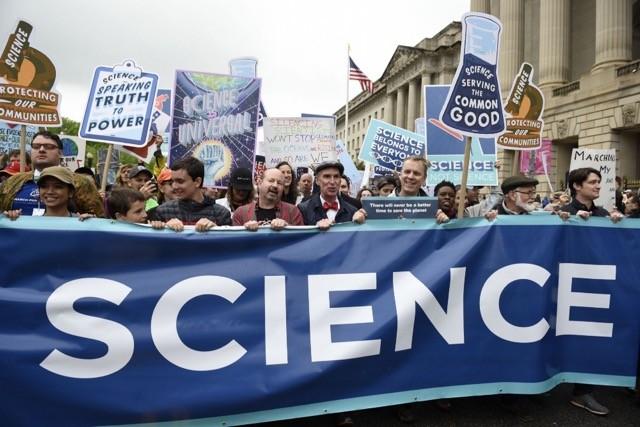
Penn Staters' voices heard at science march in Washington, D.C.
More than 130 members of the Penn State and State College communities traveled to Washington, D.C., last month to take part in the March for Science, a nonpartisan event organized to rally support for science.
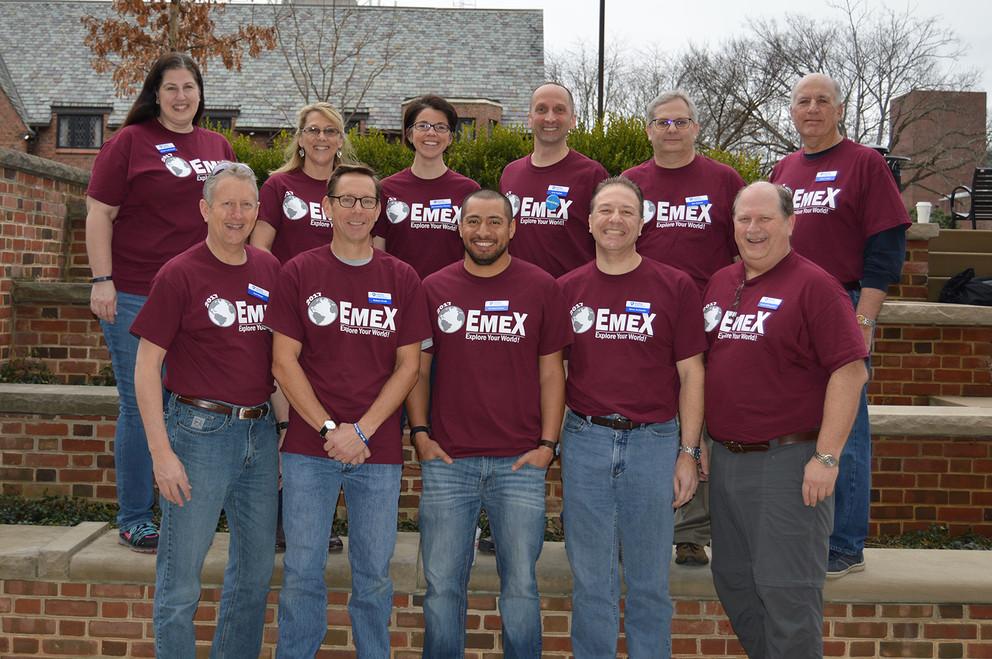
Alumni mentoring program underscores dedication to improving student experiences
Alumni of the College of Earth and Mineral Sciences volunteer their time to benefit students in the college in the numerous ways, the newest of which is an alumni-student mentoring program.
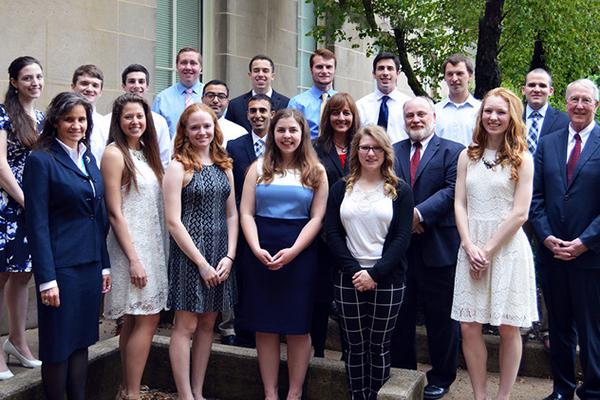
Sixteen EMS students recognized for scholarship, global experience and service
Sixteen students were inducted as laureates of the Earth and Mineral Sciences Academy for Global Experience (EMSAGE), which honors a select number of students in Penn State's College of Earth and Mineral Sciences for their scholarship, service and global experiences.

Five Penn Staters to receive Honorary Alumni Award
Five longtime Penn State champions and benefactors — including John A. Dutton, professor emeritus of meteorology and dean emeritus of the Penn State College of Earth and Mineral Sciences — will be recognized by the Penn State Alumni Association and named honorary alumni.
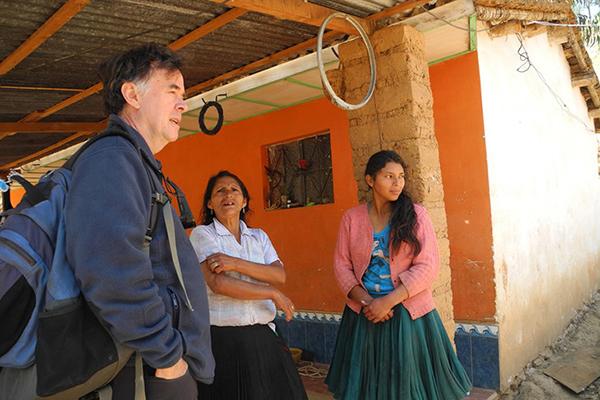
Integrative approach needed to protect crop biodiversity, researcher says
In a commentary in the April issue of Nature Plants, Karl Zimmerer, professor of geography, argues that a comprehensive approach to protecting the human use of biodiversity of agricultural crops is vital to a sustainable food future that addresses global hunger, increasing populations and changing climate.
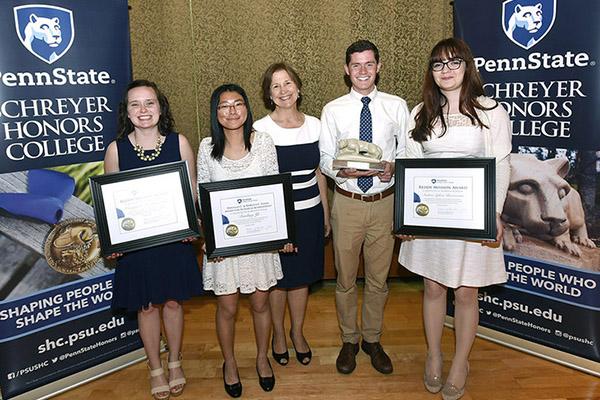
Schreyer Honors College presents graduating scholars with awards
The Schreyer Honors College distributed four annual senior awards to Scholars at a reception in the HUB-Robeson Center's Alumni Hall.

Graham and interdisciplinary team awarded PNAS Cozzarelli Prize
A paper coauthored by Russell Graham, director of Penn State's College of Earth and Mineral Sciences’ Museum & Art Gallery and professor of geosciences, received the Cozzarelli Prize from the Proceedings of the National Academy of Sciences (PNAS). Each year, PNAS gives the award to the best published paper of outstanding scientific excellence and originality in the six broadly defined scientific areas of the National Academy of Sciences.

Army captain balanced military training, deployment while completing his degree
Army Capt. Andy Duhon balanced his coursework with his military service and family as he earned his master’s degree through Penn State World Campus.
Record 83 undergraduates receive 2017 Erickson Discovery Grants
Eighty-three students from across Penn State’s campuses will each be awarded a $3,500 Erickson Discovery Grant for summer 2017 through the Office of Undergraduate Education. The students will use the funds to immerse themselves in original research, scholarship, and creative work under the direct supervision of a faculty member.

Grads to share how Penn State World Campus helped lead them to new careers
Christy Grim quit her job to take an internship she hoped would lead to a career in IT, and retired Air Force Lt. Col. Tom Fritz wanted to pursue his interest in sustainability. Both chose Penn State World Campus to learn the skills they needed to make career changes.