-
About
-
Enrollment Numbers
-
Academics
-
Undergraduate
-
Graduate
-
Research & Faculty
-
News & Events
-
Alumni & Giving
-
Sustainability
The Department of Materials Science and Engineering at Penn State is an international leader in materials education and research. As a top-ranked program, the department thrives on a rich collaboration between faculty, staff, students, and researchers to promote a well-rounded academic experience and innovative research opportunities. Our department offers ABET accredited degree programs at both the undergraduate and graduate levels. View the information below to learn more.
Department head: John Mauro
Associate Head of Diversity, Equity, and Inclusion: Enrique Gomez
Associate Head for Undergraduate Education: Amy Robinson
Associate Head for Graduate Education: Venkatraman Gopalan
Degrees offered: B.S., M.S., Ph.D., and minors
Website: https://matse.psu.edu

Penn State is the largest Materials Research Institution in the United States. Its faculty and research centers are world renowned for contributing breakthrough research in their respective fields. Anchored by the renovation of its state-of-the-art Steidle Building, the Department of Materials Science and Engineering includes laboratories devoted to computational research, material processing, and characterization, in addition to outstanding spaces for meetings, group work and information interactions.
EMS recognized exceptional staff at its annual Dean’s Staff Appreciation Luncheon held in December 2025 at the Nittany Lion Inn. The awards program consists of three annual awards, the Future Star Award, Circle of Excellence, and the EMS Ambassador. The Charles Hosler Diversity, Equity, and Inclusion Staff Award was also recognized.
Allison Beese, professor of materials science and engineering and of mechanical engineering at Penn State, has been named the senior associate director of Penn State’s new National Security Institute. She will begin her appointment on May 15.
Researchers have figured out how to get DNA, a biological material, to work with electronics, by pairing synthetic DNA with a semiconducting material called crystalline perovskite.
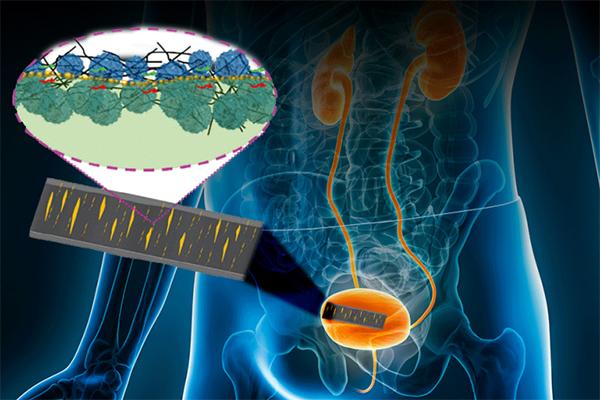
A stretchy, conductive type of plastic could help power the next generation of implantable biomedical devices, like longer-lasting pacemakers or glucose monitors, according to Enrique Gomez.
A team led by Penn State researchers reported a novel material made of cheap, commercially available plastics that can handle four times the energy of a typical capacitor at temperatures up to 482 F.
Nutifafa Doumon and Souk Yoon “John” Kim found that adding a chemical derived from hydrogen and carbon may help organic solar cells become a more viable alternative.
Venkatraman Gopalan, professor of materials science and engineering, has been named a distinguished professors for 2026.
Through “Mission: Materials Science,” graduate students from across disciplines have partnered with museum educators and media professionals to transform materials science research into free, hands-on learning activities.
The 18th annual Materials Visualization Competition (MVC18), an annual scientific and artistic visual competition is now accepting submissions through March 1.
Penn State researchers have developed a new AI framework with potential implications for fields ranging from Alzheimer’s disease research to advanced materials design. The approach teaches AI models to recognize and adapt to hidden differences in data quality rather than ignoring them.