


Our graduate students are integral to the research we conduct, and they also are dedicated to making a difference in communities. Learn more about their research, outreach efforts, and other projects below.
News
Feb. 17 EarthTalks: Translating STEM research to improve K-12 education
Kathleen Hill, director of the Center for Science and the Schools, and teaching professor of science education, will give the talk, “Center for Science and the Schools: Translating STEM Research to Improve K-12 Education,” at 4 p.m. on Monday, Feb. 17, in 112 Walker Building on the University Park campus. The talk also will be available via Zoom.

Seminar on flood insurance policies to be held Feb. 19
Steven Koller, postdoctoral fellow in climate and housing at Harvard University, will give the talk, “The Willingness to Pay for Vehicle Flood Insurance,” at noon on Wednesday, Feb. 19, in 157 Hosler Building on the University Park campus.

Feb. 12 EEEPI seminar: Effect of policies on groundwater resources in India
Shweta Bhogale, postdoctoral fellow at the Massachusetts Institute of Technology (MIT), will give the talk, “Run on the Reservoir: Evidence on Administrative Competition for Groundwater in India,” at noon on Wednesday, Feb. 12, in 157 Hosler Building at Penn State University Park.
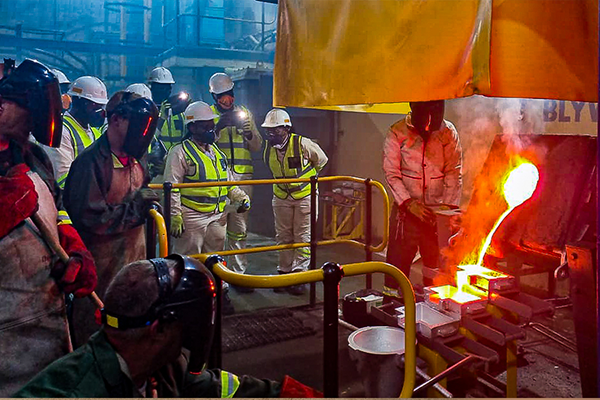
Energy and mineral engineering students attend South Africa Mining Conference
Three Penn State energy and mineral engineering doctoral students traveled 8,176 miles from University Park to South Africa to attend the Mintek@90 Conference last fall. Hosted by Mintek, one of South Africa's leading mineral research organizations, the group presented research and introduced Penn State as a strategic research partner to South African academic and industrial leaders.

Laifang Li to discuss North Atlantic cooling at Geography Coffee Hour
The Penn State Department of Geography will host Laifang Li, assistant professor of meteorology and atmospheric science at Penn State, as part of its spring 2025 Coffee Hour lecture series. Li’s talk, "Changing Atmosphere Cools the Subpolar North Atlantic Throughout the Past Century," will explore why a region of the North Atlantic has been cooling for decades despite global warming.

New method for sustainable lithium extraction could reduce emissions by 75%
With an electric current and hydrogen peroxide, researchers at Penn State have developed a more efficient way to extract lithium, a key component in the batteries used in electric vehicles and portable electric devices, directly from ore found in the common mineral spodumene. The process could facilitate a 35.6% reduction in cost and a 75.3% reduction in CO2 emissions compared to traditional, less sustainable extraction methods, according to the team, led by Feifei Shi, assistant professor of energy engineering at Penn State.
EEEPI talk: Sustainable energy strategies for sub-Saharan Africa households
Pamela Jagger, an applied political economist whose research focuses on the dynamics of poverty and environment interactions in low-income countries, will give the talk, “Pathways to Household Energy Transitions in Africa,” at noon on Wednesday, Feb. 5, in 157 Hosler Building on Penn State's University Park campus. Her talk is part of the spring Initiative for Energy and Environmental Economics and Policy (EEEPI) seminar series and is free and open to the public.
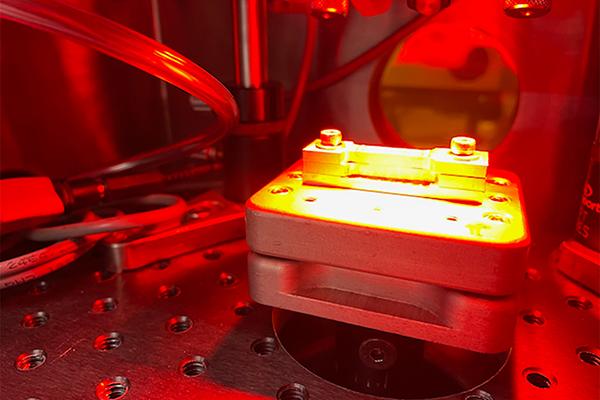
Getting over the hump to improve fuel cell manufacturing
Fuel cells offer a form of clean energy across many sectors and are of particular interest in vehicles, where they produce no emissions. The production of fuel cells requires the use of a rapid laser welding process; however, welding at too high a speed results in humping, marked by surface irregularities on the weld seam.

Broader impacts and engagement in research design focus of spring EarthTalks
The Earth and Environmental Systems Institute (EESI) EarthTalks spring 2025 series, “Broader Impacts and Community Engagement in Research Design,” will highlight innovative and effective ways for researchers to engage more meaningfully in the research design of public impact activities for earth and environmental systems research.

EEEPI talk to focus on environmental aspects of biofuels
Maruf Morshed, assistant teaching professor in energy business and finance at Penn State, will give the talk, "Are Biofuels More Environmentally Friendly? The GHG Emissions Impacts of Increased Biofuel Production,” at noon on Wednesday, Jan. 29, in 157 Hosler Building on the University Park campus.